 Sailing Dinghy
|
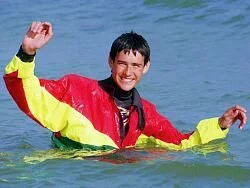
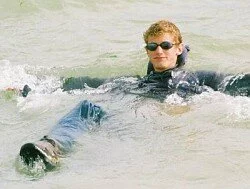
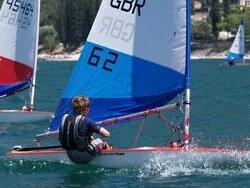
Fun in Boats"Believe me, my young friend, there is nothing, absolutely nothing, half so much worth doing as simply messing about in boats." ~ Ratty to Mole, The Wind in the Willows In this section we share with you some useful stuff about boats. Find out what boats you want and what clothes to wear when you get wet. Boating is an exciting sport if you learn it well. You can paddle or sail to places other people can't reach, like calm inland waters, whitewater rivers, and along the coast. Join your friends for a quiet paddle down a lazy river. Enjoy nature in peace and quiet. Go for a swim whenever you like. Paddling your way through the wilderness can be a wonderful opportunity to get some exercise, socialize with friends and explore wild places that are normally inaccessible. That is what canoeing is all about. If you go out with friends you may want to combine kayaks with canoes and rafts for greater variety. Kayaks can escort the slower canoes or rafts which carry most of your gear. Known for their handling and seaworthiness, kayaks take many shapes depending on their desired use. Boats and EquipmentThe instructor may give you an overview on the different types of boats and any must have equipment, like buoyancy aids, life jackets, paddles, spray decks, and the right clothing to help keep you warm. You may also learn about safety measures like capsizes, swimming in clothes, and how to carry your boat. Sometimes they show you a training video. Take good notes so that you can refer back to these at a later date. PracticeFirst of all learn how to handle and sail your boat, preferably as a team. Obviously, this requires some co-ordination by the team and also requires one of the team to take the lead and set the pace. Next, learn how to steer the boat. Be Prepared To Get WetYou should be confident in the water with your head above and below. If you are the kind of person who would panic when under water, think carefully before considering taking up boating as a sport or hobby. Anyone considering boating lessons should be able to swim at least 50 metres fully clothed. You should also take the mandatory dip in the water when you learn how to capsize a your boat, how to right it and then get back inside safely. It isn’t all plain sailing, you have to be able to get back in once you fall out, but it is easier than it looks. Capsize and RescueWhen you're out boating regularly, a capsize is likely sooner or later. If you're not sure how to deal with capsizes, the results can range from fun to unsettling to quite dangerous. With training, practice and experience, performing a rescue can become simple and routine, even when it is unexpected. If everyone in your group has rescue training, some practice and good judgement, the chances of having a serious incident are quite low. Fun GamesThen indulge your team in some educational games. Stand up in a canoe and learn how to keep your balance. Of course, if you don’t get it quite right the lesson is compounded by another dip into the water. You will find that this helps you learn to balance a lot better, quite quickly! Get GoingAfter learning all about boats, the different skills required, and the mandatory capsize drills, it is time to progress onto open water. The whole experience is designed to encourage friendship, trust, leadership and teamwork. It is all great wet fun. |
|
|
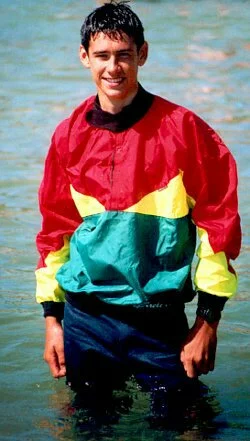
What clothes should I wear?You will have a lot more fun on the water if you plan to get wet! Always dress for the water and not for the weather. Whatever you wear, remember that it is okay to be too warm because luckily in water sports you can always cool off. Avoid CottonCotton is never a good idea on temparate coastal waters. It stays cold and gets heavy when wet. Wear clothes made from synthetic water-wicking fabrics. Nylon and polyester clothes are best for the water. LayersWear several layers and you feel warmer even when wet. The base layer traps warmth next to your skin. The middle layer keeps you warmer. The top layer protects you from wind.
Base LayerFor any canoeing or kayaking adventure you should start with a light-weight, close-fitting polyester or polypropylene undershirt such as a rash guard or wicking underwear you would wear for skiing. Add thermal leggings or long johns. Middle LayerNext pick a warmer layer such as tracksuit. If you don’t have a wetsuit or a drysuit you can wear polypropylene long johns and a fleece top. Outer LayerA windbreaker cagoule is fine with light nylon pants. Avoid front zips as they add uncomfortable bulk and stiffness. Socks and ShoesWear shoes you can swim in and that you are willing to get wet. Warm synthetic socks are nice, even with neoprene booties. Go for a SwimBefore you go canoeing or kayaking, try your complete outfit in the water to make sure all fits well. Swim a good distance, then sit on the beach for a while to see if the wet clothes keep you warm enough. If not, add another layer. |