|
|
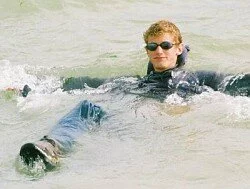
Keep warm when enjoying your water sports.
|
Dress for Comfort and Warmth
|
Dress properly for existing and expected conditions. Several layers of thin clothing reduce heat loss and thus keep you warmer than just one or two thick layers. Extreme cold requires wetsuits or drysuits, but in more moderate conditions you can use layers of more comfortable functional clothing.
Choose fabrics that provide warmth even when wet. Man-made fibres are warmer than wet cotton. Blue jeans get very cold when wet. Cotton should never be worn in cold weather conditions because they "wick" heat away from the body when wet, accelerating the affects of hypothermia.
Footwear
Sandals and sports shoes with socks provide extra comfort and protection. The extra drag of the shoes slows your swimming somewhat. Get used to it, many water sports require shoes.
|
The inner layer reduces waterflow past your skin.
You can also wear for sunburn protection on warm days.
|
Base Layer
Start with a moisture-management layer next to the skin, a base layer that wicks perspiration away from your body. Kokatat makes an Inner Core line; NRS has HydroSilk and MicroLite; Immersion Research offers a Thin Skin material. Look for wicking, quick-drying material.
Your first layer of clothing should be skin tight. It reduces waterflow past your skin when swimming and forms a thin water layer that warms up a bit. Manmade fibres are better as they don't hold much water. Materials like polypropylene and polyester tend to resist water retention best and you warm up faster after your swim. Lycra suits are also helpful.
Cotton is very comfortable for swimming. It soaks up lots of water and gets heavy which makes it ideal for power training in pools. But out of the water it retains a high level of moisture and also holds water against your skin, rapidly moving heat away from your body, It's one of the worst materials for staying warm when wet.
|
|
The middle layer adds warmth.
|
Middle Layer
The middle or insulating layer is designed to keep you warm when it gets colder and is worn over a base layer and under an outer layer. Made from synthetic thermal fibres, it assists the movement of moisture to the outer layer. These fibres should not absorb much water; they should dry quicky and so keep you warmer.
Tracksuits are inexpensive and and probably the comfortable middle layer. Hooded tops reduce windchill and sunburn risk. Unlined tracksuits don't hold much water, it runs out quickly and the fabric dries reasonably fast. Any lining will hold pockets of air and water and will become a hindrance.
Wool also keeps you warm, even when wet, but it can be itchy on the skin so you should always wear a base layer with it. SmartWool and several other companies have a new generation of wool garments that don't itch and can be washed. They are good under waterproof layers.
Polartec has some new fleece products for boating and other water sports. Polartec Thermal Pro PowerStretch and Polartec AquaShell, which has body-hugging four-way stretch and a windproof membrane. Check out Kokatat's Outer Core, Immersion Research's Thick Skin, and the NRS Mystery shirt, to mention just a few.
A snug fit is good, not too tight or too loose. It may trap a bit of air and give you some bouyancy. Air is a good insulator. Fleece and wool are both good insulators, but can get heavy when wet. Multiple middle layers will allow you to easily adjust to a change in temperature. In warmer climates you may not need a middle layer.
|
The outer layer reduces windchill.
|
Outer Layer
The outer or waterproof layer is intended to keep the elements out. It usually has very little or no thermal properties, but should be entirely water and windproof.
The purpose of the outer layer is to keep you warm, not dry. You get wet anyway, either from perspiration or from getting into the water.
The solution is to wear windproof clothes that keep the wind off your body. A rain jacket, anorak or a light nylon overall stops the windchill and reduces cooling caused by evaporation when you're hopping in and out of the water all the time. This outfit is great for many water sports. Make sure it's large enough so you can move freely.
A warm layer of air, warmed up by your body or the sun, gets trapped inside it. If your clothes are not windproof this warm layer of air will be blown away and you'll get cold. The purpose of the outer layer is to keep you warm, not dry. You get wet anyway, either from water or perspiration.
In warmer climates a breathable Pertex suit keeps various beasties off you when swimming and protects you against sunburn. Its soft fabric dries very quickly and thus makes a nice amphibian outfit.
|
First swim only in lightweight base layer clothes.
Then add mid layer clothes for extra warmth.
Finally wear outer layer clothes to protecct from windchill.
Wrap up in a poncho afterwards. It also works as a lightweight portable changing room.
Above all, have fun with your swimming training.
|
Windchill Effects
- You sometimes hear about windchill in weather reports. It indicates how much the wind can chill you down if you don't limit your exposure. This is even more important when you're wet.
For this session pick a windy day to experience what windchill is all about and how different clothing layers can protect you.
- Enjoy a brief swim dressed in base layer, like T-shirt with shorts or lycra swimshirt and running tights. When you come out you'll feel the windchill.
- Quickly add some mid layer clothes, like jeans and a long sleeve sweatshirt or a jogging suit, and jump back into the water. Now you'll be a bit warmer but it also takes somewhat more effort to move. Out of the water, you'll still feel the wind chill, but not as much.
- Now add the outer layer of windproof or waterproof clothes and hop back into the water. An anorak and matching pants or a sailing overall will be best. A poncho is also quite easy to swim in, if you've mastered the skill and know what you're doing. This outer layer cuts out the windchill and turns your swimming into heavy training. You'll soon get warmer from the exercise, while you enjoy the rest of your swim.
|
|